How can parents and teachers facilitate children’s conversations?

Children learn very early in life that language helps them communicate their needs and interests to other people around them.

How can parents and teachers facilitate conversations?

Firstly, when parents or teachers notice that children are engaged in a deep conversation, they should consider whether it is worth to interrupt the children in order to move to a different activity. It is more respectful to give children notice and time to bring the conversation to a closure.

Secondly, parents and teachers need to provide opportunities for children to engage in different types of groupings.

Children need to learn to share ideas, to listen, and to voice disagreements in different situations. They also need to learn to take turns in one to one conversations as well as in large groups where the waiting time could be longer.

Children could be grouped by same or mixed age, gender, ability, or interest. There are advantages and disadvantages to each type and children could contribute differently to each type.

Parents and teachers need to expose children to situations where different types of groupings are taking place. They need to note of what is working and to draw strategies to strengthen the groupings that are not functioning well. For example, groupings based on gender are also based on interests. Teachers and parents need to plan experiences where girls and boys are engaged in non-stereotypical activities with children of same or mixed gender.

As children grow up in a global world, they will encounter all sorts of groupings and need to engage in the different scenarios successfully. The early years help set the path to success.

For further reading, refer to:

Arthur, L., Beecher, B., Death, E., Dockett, S., & Farmer, S. (2015). Programming and planning in early childhood settings (6th ed.). Victoria, Australia: Cengage Learning.

 HOME

How can schools stop bullying and what could children do?

Bullies target a person with the intent of harming physically, emotionally, or socially. Bullying is rarely innocent and happens for a variety of reasons. The presence of the bullied person is not welcome and he/she must pay for being different and is made to feel that he/she will not belong easily if at all.

Bully Stoppers is an online resource that includes learning modules and advice sheets to help students, parents, teachers, and principles address and prevent bullying. The following is drawn from that reference.

Children who are bullied could do any of the following:

  • Tell someone they trust and write down the actions with dates and times.
  • Ask for help: Targeted children need to ask for advice on how to address the issue.
  • Confront the bully(ies) confidently if it is safe to do so alone or ask a friend to accompany them.
  • Think of the people who love and support them and draw strength from this.
  • Accept that we should not please people at the expense of what we like, who we are, or what is better for us.
  • Avoid being intimidated by the bullies by ignoring them.
  • Not internalise the negative outcomes intended by the bullies and understand that it is not their fault that they are targeted.
  • Avoid retaliating from the bully(ies) as this tactic rarely works.
  • Engage in activities in and outside school that help develop fulfilment and positive self-worth.
  • Befriend children who are supportive.

Unfortunately, the topic is rarely resolved on its own. Schools have an important role to play in building healthy social networks on the school grounds so children grow up to become successful members of their societies and the world. Teachers and principals need to be part of the solution by establishing anti-bullying programs in schools. Empowering each child is the first step.

Reference:

State Government of Victoria. Department of Education and Training. (2019). I’m being bullied. Retrieved from  https://www.education.vic.gov.au/school/students/health/Pages/studentbullied.aspx

HOME

Engaging children in successful problem solving skills

To be successful in a global world, children will need to be effective problem solvers.

Parents and educators can help children develop problem solving skills by:

  • Asking children for their opinion on issues that affect them.
  • Encouraging turn taking.
  • Engaging children in individual reflections and group discussions.
  • Giving children time to respond and listening to what they have to say.
  • Discussing proposed actions and reaching a solution.
  • Trying out the solution and monitoring its success in solving the issue at hand.
  • Making the process of problem solving part of everyday communication.

A respect for what children can offer at all stages of their lives is the first step toward children’s success in life in a global world.

HOME

Digital technologies and children: Guidelines for use

kid-notebook-computer-learns-159533

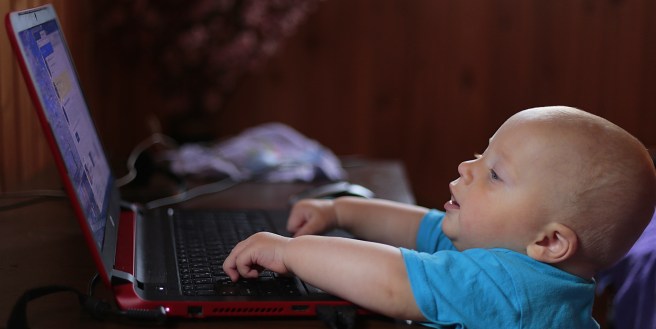
Children from all over the world are using digital technologies. Early Childhood Australia issued a statement regarding the use of digital technologies by young children. The main points included the need for parents and educators to:

  • Engage children in digital technologies as a group activity with peers. The use of digital technology should not be an isolating experience.
  • Encourage children to take breaks, to practice active physical activity, and to rest the eyes.
  • Provide sleeping routines that do not include digital activities.
  • Help children develop a sense of online safety and an understanding of what could be shared in an online environment.
  • Guide children on how to seek assistance if they receive invitations from unknown people.
  • Select games, applications, and content that are age and developmentally appropriate.
  • Discuss with children the nature of their online activities and stay up-to-date with how to protect them.

For more information, check the Statement on young children and digital technologies.

HOME

Bilingualism

pexels-photo-247644Bilingual children speak two languages. This can be at home with each parent being a native speaker of a language or can be part of a child’s education. Children develop the skill of code switching according to the situation. To do so successfully, children need to be aware of the difference between the two languages and where words belong.

When children are learning the two languages simultaneously, they should be hearing the two languages frequently. Adults can help by pointing out to the child that there are different words that say the same thing. Children might mix words from two languages in everyday communication. In many cultures, this is an accepted practice and sometimes is a show-off practice.

When children are introduced to the second language later, they have already developed competency in the first language. Children will observe and listen to what the others are saying and participate in classroom activities. They might not initiate conversations and would respond using words and short expressions.

In learning any skill, children who are shamed when making mistakes or discouraged to bring their heritage in a classroom will not be confident in experimenting with languages and will feel excluded. Learning languages enriches lives and should be encouraged in a global world.

HOME

Education

Education should go hand in hand with development. What is our role as parents and educators as children grow up?

A variety of topics will be presented. They will focus on harmonising education and development.

Yes, we want to think of where the child’s stage of development is as we plan activities. More important is to think how the child is different and how education can help him/her fulfill his/her potential.