Nature vs. Nurture

question marks imageWhich is more important in shaping who we are: genetics (nature) or the environment (nurture)?

To make the long story short, nature gives up the potential that we could reach. That potential has not been measured accurately with the current tests.

The environment can present barriers or incentives for us to reach our potential. How far we can go in a global world remains open to speculations. Why? Because we are the only ones who could decide how far we could go once put in different situations. A positive outlook and a friendly environment are enough to help unleash our potential.

For more information, check this resource by Bright Hub.

Managing children who are fussy eaters

Children can get fussy about eating and parents can become frustrated on how to manage the situation. To alleviate the issue, parents are encouraged to:

  • Stick to fixed times for meals.
  • Offer healthy options.
  • Have the child decide how much to eat.
  • Avoid giving the child unhealthy food between meals.
  • Limit the child’s intake of water and juices immediately before scheduled meals.
  • Practise healthy eating and show enjoyment while eating.
  • Remove the food after 20 minutes and refrain from offering alternatives.
  • Avoid giving the issue too much attention.

Reference:

Australian Government. Department of Health and Ageing. (2009, 2013). Get Up & Grow. Healthy eating and physical activity for early childhood: Family book. Retrieved from https://www.health.gov.au/internet/main/publishing.nsf/Content/phd-gug-child-familybook

Play and the acquisition of mathematical concepts

Play in the classroom or at home provides opportunities for math explorations. Mathematical concepts that can be covered in the classroom are:

Number: A child could count a small group of children sitting at a table and give them one slice of apple each.

Patterns and algebra: A teacher could ask children to make up steps for a dance of their choice.

Measurements: Engaging in a cooking activity allows children to measure ingredients.

Space: Filling in sand in buckets of different sizes or putting away blocks extends children’s understanding of space.

Chance and data: Making predictions about the weather and giving reasons for the predictions.

In order for children to internalise the concepts, it is important for teachers and parents to encourage them to verbalise their understanding and to help them make meaning of the concept(s) instead of giving them the answers. Engaging in problem solving and reasoning helps children incorporate mathematical concepts naturally and successfully in their daily lives and in their schooling.

For further reading, refer to:

Yelland, N., Diezmann, C., & Butler, D. (2014). Early mathematical explorations. New York, NY: Cambridge University Press.

HOME

How to make caring routines for infants and toddlers prime times?

Parents and teachers engage in caring routines with infants and toddlers on a daily basis. Examples are feeding, washing, dressing, and diapering.

It is important for the child to gain independence by developing acceptance of who they are and what they need. Some suggestions to ease the implementation of the caring routines are:

  • Be patient with the child as much as time permits.
  • Talk to the child by letting him/her know what is going to happen and how.
  • Propose options when the infant or toddler could contribute instead of doing everything for them. Have them take control of their bodies.
  • Accept the bodily wastes of infants and toddlers and remain positive when changing a child. Explain to them what you are doing so they could transition to taking control of their urges in due time with acceptance.
  • Respect children by not engaging in feeding or diapering while ignoring them. Feeding is the starting point of social communication with the child while taking meals as a family.
  • Acknowledge that you might have feelings and cultural beliefs about how children should be raised and be willing to review them if they impact negatively on the child.

To read more, refer to:

Greenman, J., Stonehouse, A., & Schweikert, G. (2008). Prime times: A handbook for excellence in infant and toddler programs (2nd ed.). St. Paul, MN: Redleaf Press.

HOME

Play and assessment in early childhood education: Is it a paradox?

Play is a main medium where teachers can learn about the children. It provides an opportunity for teachers to observe and assess children systematically and frequently. Depending on how much time teachers have, they could observe by taking detailed notes as events are unfolding or by writing short summaries. Teachers can also collect samples or take pictures of children’s work to save in a portfolio.

The assessment through play is developmental and incremental in nature. Children achieve differently depending on the time, activity, and context. Play activities mirror children’s interactions with material, handling of new instructions, engagement with peers, problem solving abilities, implementation techniques, and task closure. Agency and creativity are also transparent through play.

For further reading, refer to:

Ebbeck, M. (2016). Assessing children’s learning through play. In M. Ebbeck & M. Waniganayake (Eds.), Play in early childhood education: Learning in diverse contexts (2nd ed., pp. 42-59). Victoria, Australia: Oxford University Press.

HOME

Challenging barriers to inclusion in early childhood education

Educators who want to implement inclusion practices in early childhood education are challenged by three main types of barriers: personal, attitudinal, and organisational.

Personal barriers revolve around the educators’ feelings of discomfort in interacting with diverse children. Teaching strategies could be inappropriate due to missing background knowledge. In addition, educators feel threatened by the demands of differentiated teaching and the additional time involved.

Educators holding attitudinal barriers feel that inclusion will negatively affect children without disabilities. They perceive children with disabilities or children from different races, ethnicities, and socioeconomic backgrounds as a burden. This is often based on preconceived ideas about US and THEM with negative connotations associated with the OTHER.

Organisational barriers include lack of funding, resources, competent professionals, or commitment dedicated to inclusive practices.

Play is a developmentally appropriate medium to practise inclusion. It is a medium where all children can contribute when the activities are planned adequately.

Educators are advised to team up with families and other professionals in order to develop proficiency in practising inclusive education.

ALL children can succeed in a global world. To do so, they need to be given opportunities to build success starting in early childhood.

Reference:

National PSC Alliance. (n.d.). Inclusion fact sheet: Understanding inclusion. Retrieved from https://www.ecrh.edu.au/docs/default-source/resources/ipsp/understanding-inclusion.pdf?sfvrsn=6

HOME

The “Doll Test” and teaching respect in early childhood

Children learn to make judgments about who they are at a very young age. They have also developed ideas about different groups. The Doll Test examined children’s attitudes towards race and found that most children have practised and internalised racism.

The Doll Test is available at:

https://www.youtube.com/watch?v=tkpUyB2xgTM

An Italian version of the Doll Test experiment is available at:

https://www.youtube.com/watch?v=QRZPw-9sJtQ

In one study around Difference, Diversity, and Human Dignity (the Three Ds), a team of researchers used story time to discuss children’s emerging understandings of skin color, race, ethnicity, disability, self-worth, poverty, and gender. They analysed 36 videotaped story sessions and found that children’ negative attitudes towards the Three Ds changed. Children became more inclusive in their language and behaviour as a result of discussing the stories.

Teaching for social justice is important in early childhood in order to help children develop to their full potential and to be active members in a global world.

Reference:

Hawkins, K. (2014). Teaching for social justice, social responsibility and social inclusion: A respectful pedagogy for twenty-first century early childhood education. European Early Childhood Education Research Journal, 22(5), 723-738. doi:10.1080/1350293X

HOME

Children’s books on additional needs

pexels-photo-220320

Children’s books have the power to take us into other worlds and to immerse us in other people’s lives.

It is important that children are exposed to stories about children with different strengths and needs.

Some books that involve children with special needs could be found under the following links:

An Animated Story of a boy who hates his disabled dog

Susan Laughs: uses a wheel chair

Disability in Picture Books | Fashioneyesta

Lucy’s picture (by Nicola Moon): Lucy made a book with tactile illustrations for grandpa.

Moses goes to a concert: group of children who are deaf go to an orchestra. Using sign language (7:55).

HOME

Digital technologies and children: Guidelines for use

kid-notebook-computer-learns-159533

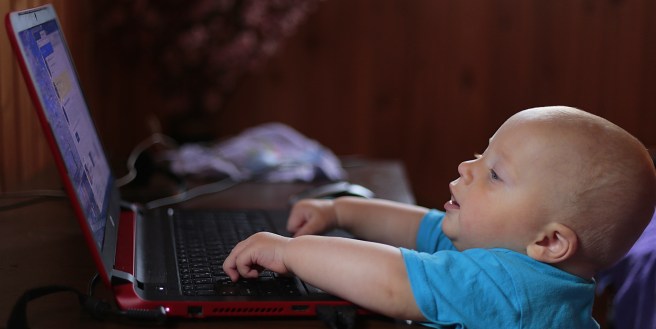
Children from all over the world are using digital technologies. Early Childhood Australia issued a statement regarding the use of digital technologies by young children. The main points included the need for parents and educators to:

  • Engage children in digital technologies as a group activity with peers. The use of digital technology should not be an isolating experience.
  • Encourage children to take breaks, to practice active physical activity, and to rest the eyes.
  • Provide sleeping routines that do not include digital activities.
  • Help children develop a sense of online safety and an understanding of what could be shared in an online environment.
  • Guide children on how to seek assistance if they receive invitations from unknown people.
  • Select games, applications, and content that are age and developmentally appropriate.
  • Discuss with children the nature of their online activities and stay up-to-date with how to protect them.

For more information, check the Statement on young children and digital technologies.

HOME

Bilingualism

pexels-photo-247644Bilingual children speak two languages. This can be at home with each parent being a native speaker of a language or can be part of a child’s education. Children develop the skill of code switching according to the situation. To do so successfully, children need to be aware of the difference between the two languages and where words belong.

When children are learning the two languages simultaneously, they should be hearing the two languages frequently. Adults can help by pointing out to the child that there are different words that say the same thing. Children might mix words from two languages in everyday communication. In many cultures, this is an accepted practice and sometimes is a show-off practice.

When children are introduced to the second language later, they have already developed competency in the first language. Children will observe and listen to what the others are saying and participate in classroom activities. They might not initiate conversations and would respond using words and short expressions.

In learning any skill, children who are shamed when making mistakes or discouraged to bring their heritage in a classroom will not be confident in experimenting with languages and will feel excluded. Learning languages enriches lives and should be encouraged in a global world.

HOME